
We all need water. Water is essential to the services and industries that businesses in our region provide, and it supports functional, healthy, and enjoyable spaces where people live and work. Using water wisely can help reduce utility costs and support our region’s shared responsibility to steward this precious resource for future generations.
The Seattle and Bellevue 2030 Districts have committed to reducing building water consumption by 50% by 2040. Establishing a clear picture of your facility’s water use is an important first step toward managing and reducing consumption. But how do you get started?
The Saving Water Partnership is an organization comprised of 19 water utilities in King and Snohomish counties. Through this regional collaboration, participating utilities offer no-cost water use assessments to eligible business customers within their service territories. These assessments provide objective, technical guidance to help businesses understand their water use and identify opportunities for efficiency improvements in alignment with 2030 Districts water reduction targets. Eligible facilities can learn more and request an indoor or outdoor assessment at SavingWater.org.
Benchmarking: Water Use Intensity
Energy Use Intensity (EUI) is now a standard metric to benchmark and track a building’s overall energy performance. A similar metric exists for Water: Water Use Intensity (WUI). WUI is typically measured in gallons per square foot per year and is influenced by many of the same variables as EUI, including building occupancy, operating hours, fixture and equipment efficiency, and climate. The table below shows WUI for several major building types, gathered from the ENERGY STAR Portfolio Manager dataset.

Source: Portfolio Manager Data Explorer
Comparing your facility’s WUI to similar property types can help identify potential water (an wastewater reduction opportunities. Calculating and tracking WUI using the free ENERGY STAR Portfolio Manager platform is a practical first step to establishing your WUI baseline and monitoring progress over time.
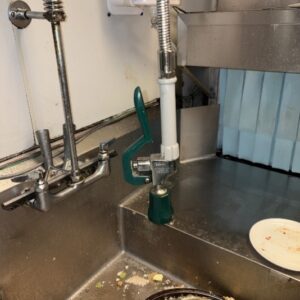
Many commercial kitchens operate pre-rinse spray valves that use more water than necessary. Replacing these with efficient models can significantly reduce water, sewer, and energy use, often with short payback periods.
While useful for benchmarking and tracking trends, WUI alone cannot identify the specific systems or processes responsible for water use. A more detailed review is often needed to pinpoint efficiency opportunities.
Enter the Water Use Assessment
Water use assessments can help organizations identify and prioritize actions that reduce water consumption and associated utility costs. During an assessment, a qualified water efficiency specialist reviews water consumption data and evaluates facility conditions to identify potential improvements.
Water use assessments can range from simple to complex, but often include:
- An analysis of historical water billing and consumption data to calculate a WUI baseline and identify trends caused by seasonal demand, occupancy changes, leaks, or equipment performance issues.
- An on-site assessment to evaluate fixtures, equipment, systems, and processes that use water. For organizations with multiple similar facilities, assessments may focus on a representative building.
- A report outlining prioritized actions to improve efficiency and reduce water use. These reports typically include operational recommendations, equipment upgrade opportunities, and estimated water and cost savings where applicable.
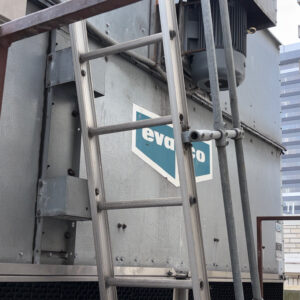
Many facilities can reduce water use and operating costs associated with cooling towers through simple operational adjustments, routine maintenance, and regular verification of proper equipment performance.
More detailed water use assessments, sometimes called water audits, can provide deeper technical analysis, similar to investment-grade energy audits. These more comprehensive audits are typically fee-based services offered by engineering firms or technical consultants and may be appropriate when planning significant capital improvements.
Many organizations find that starting with a basic, no-cost assessment helps inform next steps, which may include:
- Conducting targeted analysis of specific water-using systems identified during the initial assessment,
- Supporting water-related prerequisites and credits in building performance frameworks such as LEED, and
- Evaluating related benefits such as reduced wastewater flows, improved stormwater management, and potential energy savings.
Internal champions and dedicated executive support are also key factors in the long-term success of a water efficiency initiative. A basic water use assessment can serve as foundational documentation to share with organizational leadership, helping link overall corporate sustainability and climate goals with your building’s water footprint.
If you’re still in the initial stages of understanding your facility’s water use, the Saving Water Partnership provides free business resources and, for eligible facilities, no-cost water use assessments funded by partnering utilities. Visit SavingWater.org to explore available resources and determine eligibility.
About the Author

Thor Peterson is the Indoor Water Efficiency Program Manager for the Saving Water Partnership.